A conceptual MedTech mobile application designed to translate real-time glucose data into actionable insights, providing diabetics with security and personalized guidance.
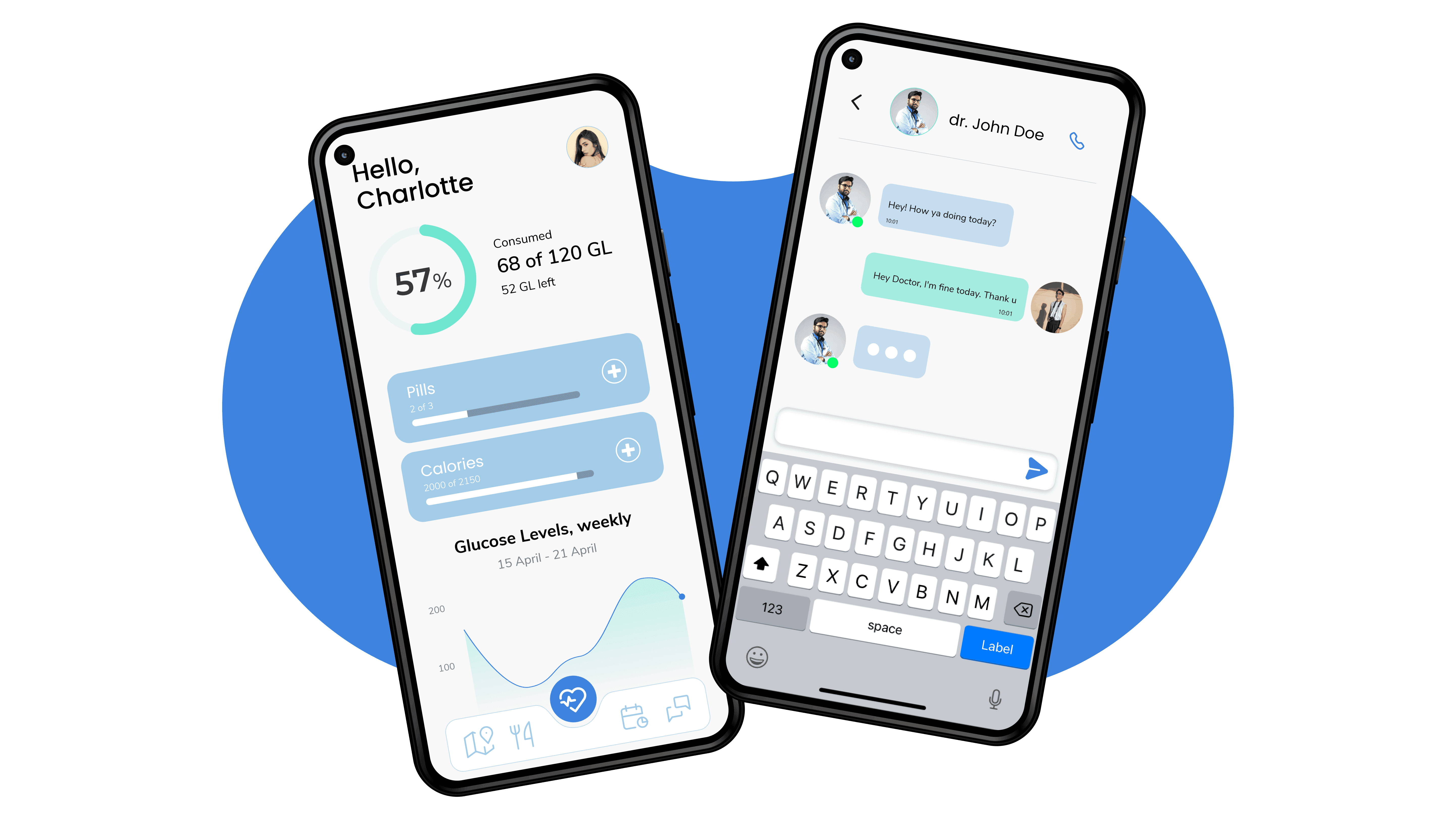
GluckoTrack is a conceptual mobile ecosystem designed to integrate with biometric implants. It goes beyond simple data tracking by translating real-time glucose metrics into actionable, life-saving insights. The application provides diabetics with a continuous sense of security through automated emergency protocols and personalized, context-aware dietary guidance.
Managing diabetes involves a constant, heavy cognitive load and underlying anxiety. While modern medicine envisions a future with real-time biometric tracking via microchips, the digital interface bridging this technology and the user remains a challenge. The primary goal of this project was to design an ecosystem that not only monitors health data but actively prevents life-threatening situations while reducing the daily stress of disease management.

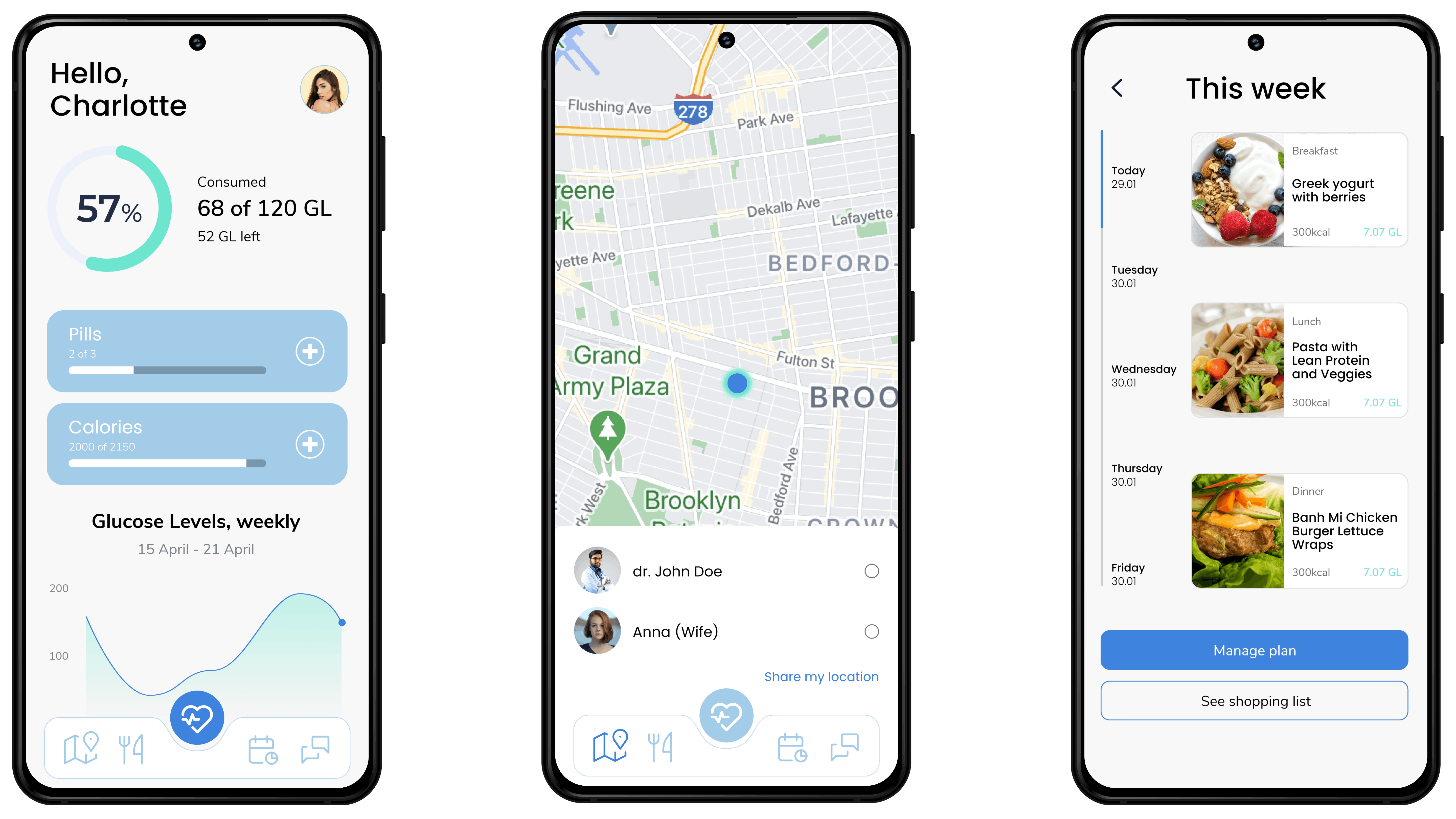
To minimize cognitive load for users experiencing physical weakness, the real-time health dashboard was designed for extreme legibility under stress, offering immediate insights into glucose trends. The experience is further personalized through a contextual nutrition assistant that suggests actionable food intake to stabilize biometrics, rather than overwhelming the user with generic plans. For critical edge cases where user interaction is impossible, an automated SOS system takes over, shifting from active input to passive monitoring to alert emergency contacts.
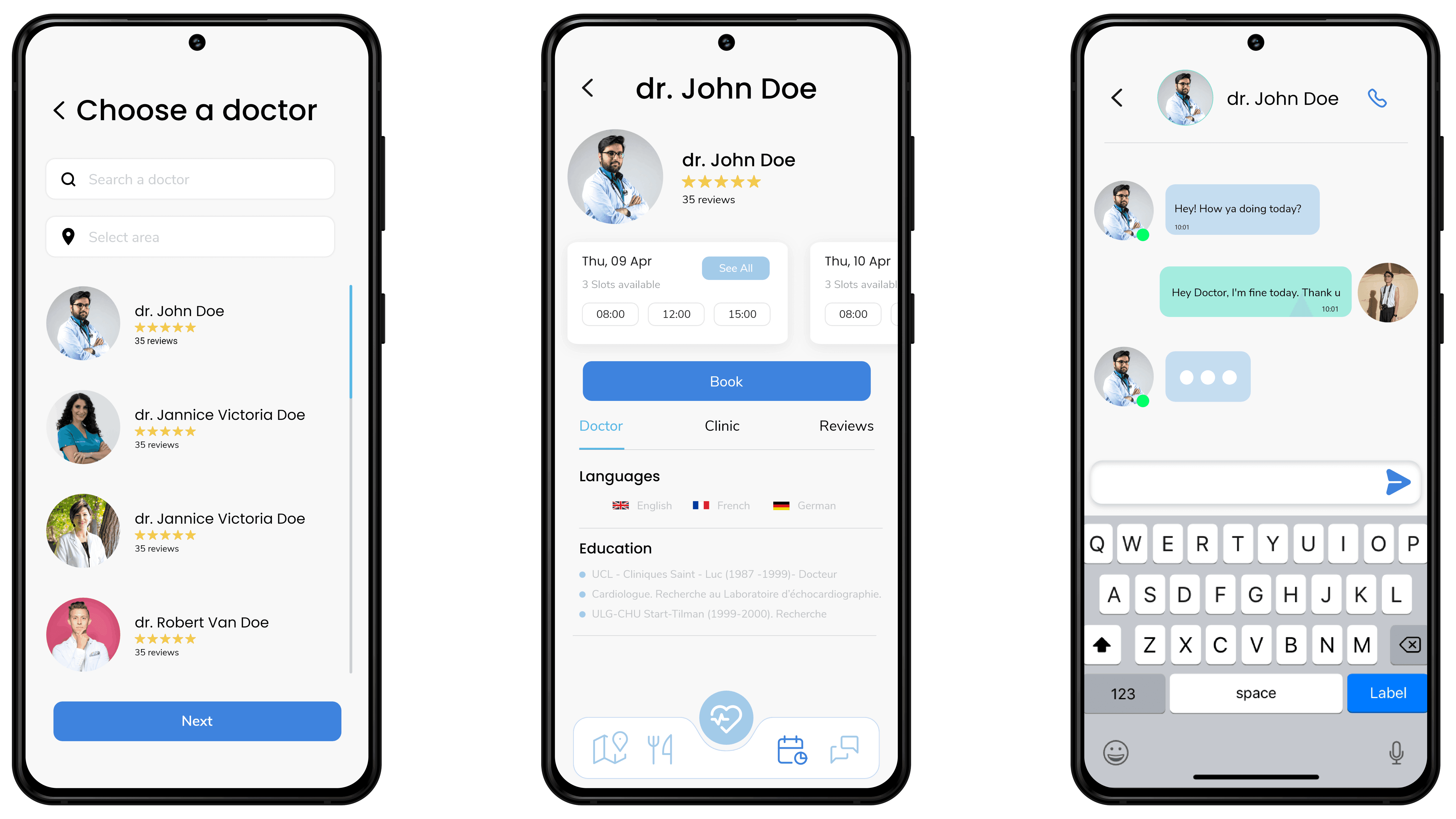
GluckoTrack was an exploration into how UX design must adapt when dealing with life-saving biometric technology. Designing for an ecosystem where users might be in a state of physical distress required stripping away unnecessary features and focusing purely on accessibility and core user flows.
As a conceptual project, the immediate next phase in a real-world scenario would be rigorous Usability Testing. Specifically, conducting stress-test simulations to observe how users interact with the SOS features and dietary recommendations under cognitive pressure, allowing for data-driven iterations of the UI.